Willa Butler · 2 September 2026
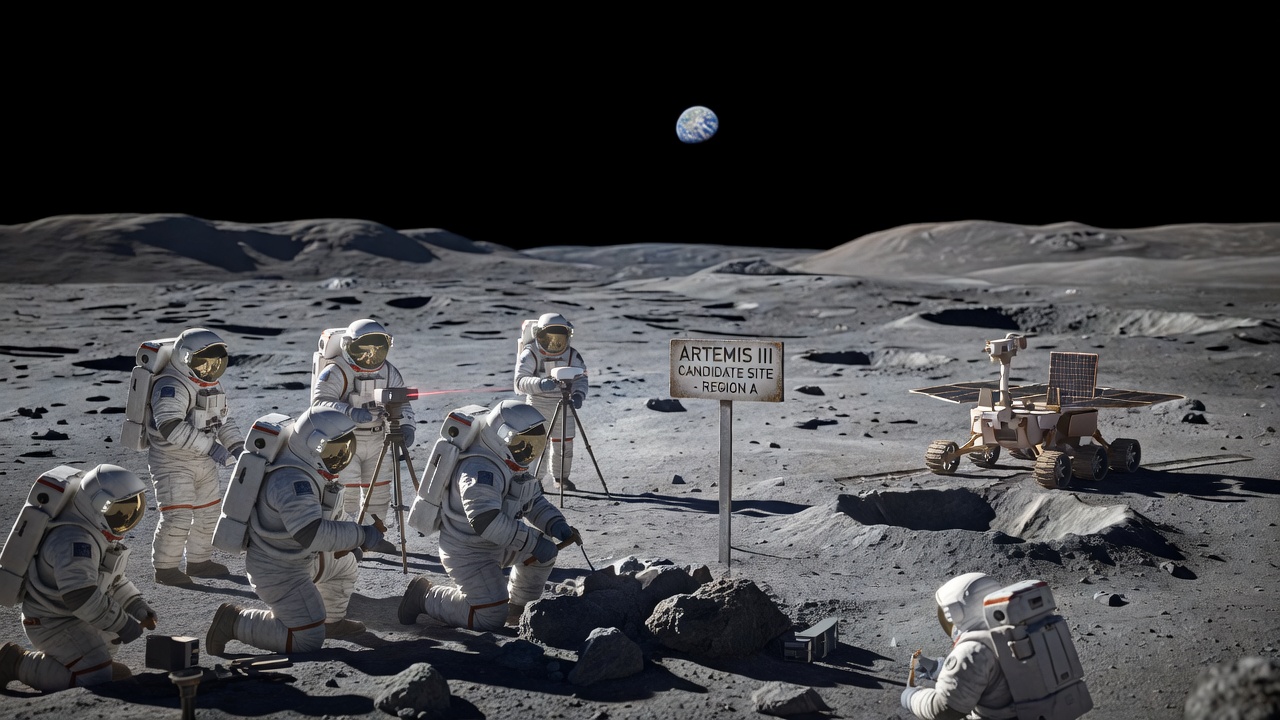
NASA's choice of landing sites for the Artemis III mission near the lunar south pole has triggered significant discussion among planetary scientists. The selected regions, including areas near Shackleton crater, prioritize access to permanently shadowed regions believed to contain water ice. Proponents argue this supports long-term exploration goals and in-situ resource utilization. Critics, however, contend that the emphasis on volatiles may overlook other high-value scientific targets such as ancient impact basins and diverse geological formations elsewhere on the Moon.
Scientific Priorities Under Scrutiny
Researchers focused on volatile resources emphasize that confirming and characterizing lunar water deposits is essential for sustainable human presence. Models suggest ice concentrations could enable propellant production and life support systems. In contrast, geologists advocate for sites offering exposed mantle materials or samples from the South Pole-Aitken basin, which could reveal insights into the Moon's formation and early solar system history. These differing objectives have led to calls for additional orbital data to refine site evaluations before final crewed landings.
International partners including ESA and JAXA have contributed remote sensing datasets that highlight trade-offs between resource potential and terrain accessibility. Some teams propose hybrid approaches incorporating multiple landing ellipses to balance competing interests. Peer-reviewed papers published in recent months underscore the need for interdisciplinary consensus to maximize mission returns.
Engineering and Operational Considerations
Engineering analyses reveal challenges posed by the rugged south pole topography, including steep slopes and prolonged shadow periods affecting solar power generation. Mission planners must account for communication delays and thermal extremes when selecting touchdown points. Safety assessments have prompted revisions to initial candidate lists, excluding zones with excessive boulder fields or crater rims that could complicate descent and ascent trajectories.
Scientists note that while resource-rich sites offer strategic advantages, they may delay studies of pristine highlands geology. Ongoing workshops aim to reconcile these views through quantitative scoring of scientific merit against operational risk. The outcome will shape not only Artemis III but also subsequent missions targeting expanded lunar infrastructure.