Freya Hartmann · 2 September 2026
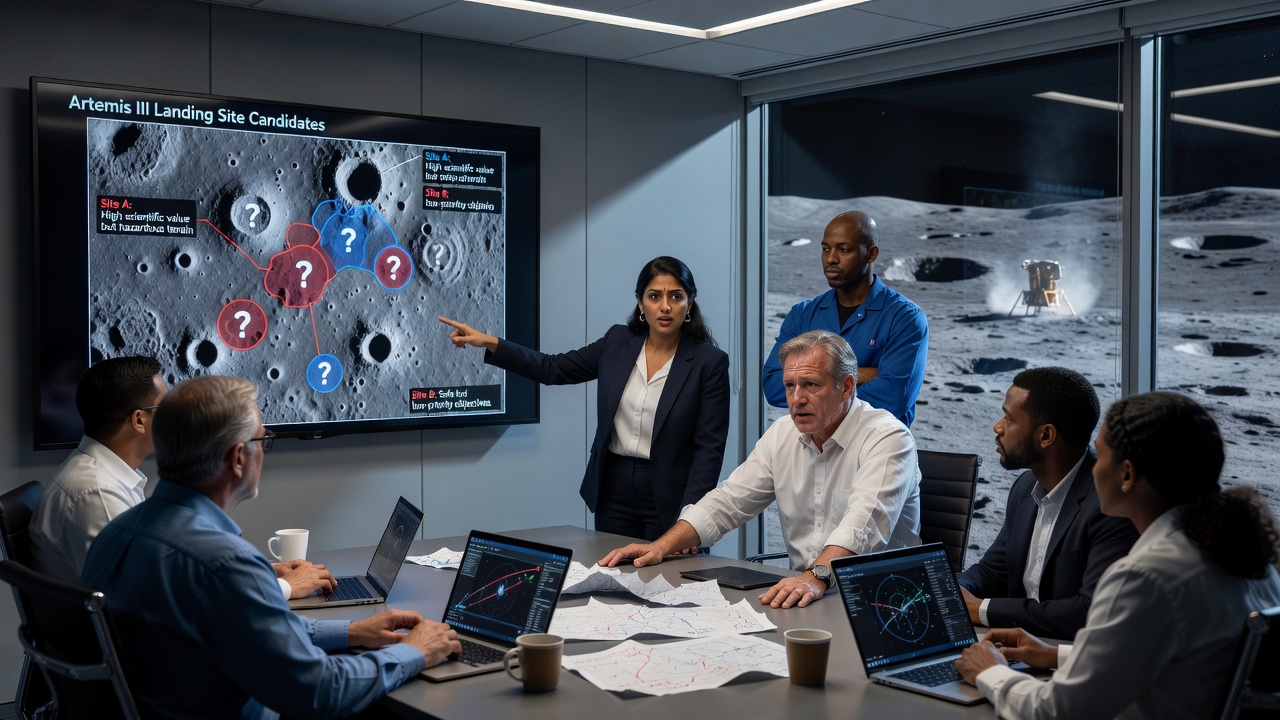
The selection of landing sites for NASA's Artemis III mission has ignited a significant debate among lunar scientists worldwide. The mission aims to land the first woman and the next man on the Moon's south pole region, but the specific locations proposed have raised questions about scientific value, safety, and resource accessibility. This process involves careful analysis of all available data to select a site that maximizes both safety and scientific discovery potential for the historic crewed landing.
Key Sites and Their Attributes
Among the candidate sites, areas near the Shackleton Crater are favored for their potential water ice deposits. However, some researchers argue that these locations present challenges due to extreme lighting conditions and rugged terrain. Alternative sites in the lunar highlands are suggested for better access to diverse geological samples, which could provide insights into the Moon's formation history. Scientists emphasize the importance of balancing exploration goals with the risks associated with landing in permanently shadowed regions. Data from previous orbiters indicate varying concentrations of volatiles, influencing the debate on where to prioritize sample collection.
Broader Impacts on Lunar Research
The ongoing discussions highlight the need for interdisciplinary collaboration between geologists, astrophysicists, and engineers. The chosen site will set precedents for future missions, affecting plans for sustained human presence on the Moon. International partners in the Artemis program are also contributing perspectives on site selection to ensure maximum scientific return. Furthermore, the debate extends to ethical considerations regarding the preservation of pristine lunar environments. As commercial interests grow, experts call for guidelines to protect scientifically valuable areas from potential contamination or disturbance. Overall, the Artemis III landing site selection process underscores the complexities of lunar exploration in the modern era. Continued dialogue among the scientific community is expected to refine the criteria before final decisions are made by NASA later this year.