Drew Fischer · 31 October 2026
Solar flare data from polar arrays prompts rethink of far-side telescope shielding strategies for sustained radio observations
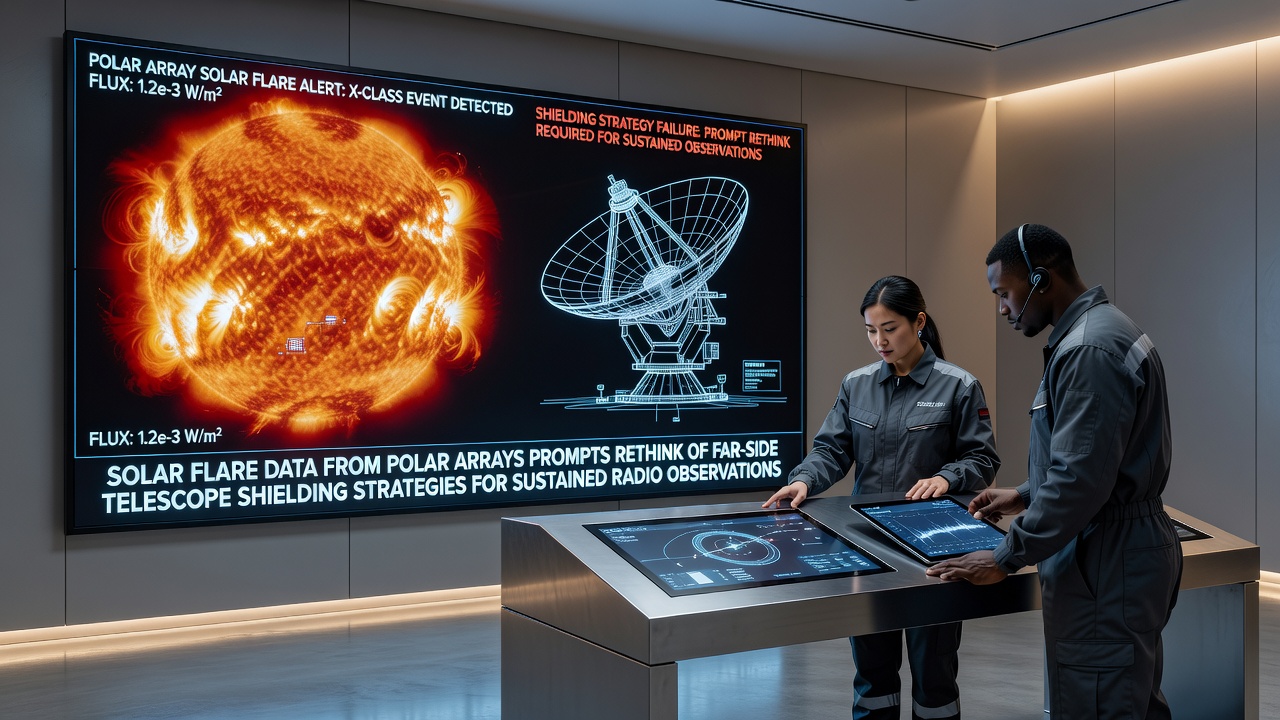
Researchers operating polar arrays in both Arctic and Antarctic regions have gathered extensive solar flare datasets that are reshaping approaches to shielding far-side lunar radio telescopes, and these findings come at a time when sustained observations require better protection from high-energy events. Data collected through 2026 shows flare intensity patterns that exceed earlier models, which means existing shielding designs for telescopes positioned on the Moon's far side may need significant upgrades to maintain continuous radio astronomy work.
Understanding the role of polar arrays in solar monitoring
Stations at high latitudes have proven effective at tracking solar activity because they offer long periods of darkness during winter months, and this setup allows uninterrupted monitoring of radio emissions from the Sun. Teams from institutions across North America and Europe have deployed arrays that record flare events in multiple frequency bands, while similar efforts in Australia and Canada add geographic diversity to the observations. According to reports from the National Aeronautics and Space Administration, flare occurrences in the current solar cycle reached peaks that align with polar array measurements taken during October 2026, and those records indicate stronger radio bursts than previously anticipated for certain event classes.
Implications for far-side lunar telescope operations
Far-side locations on the Moon provide natural isolation from terrestrial radio interference, yet solar flares still pose direct risks to sensitive receivers through particle bombardment and electromagnetic surges. Observers note that shielding strategies developed for earlier missions focused primarily on micrometeoroid protection, whereas the new polar data highlights the need for enhanced electromagnetic barriers that can handle rapid energy spikes. Researchers at several universities have modeled how these flares could disrupt signal integrity during extended observation campaigns, and the results suggest that current materials may allow leakage in higher frequency ranges used for studying distant cosmic sources.
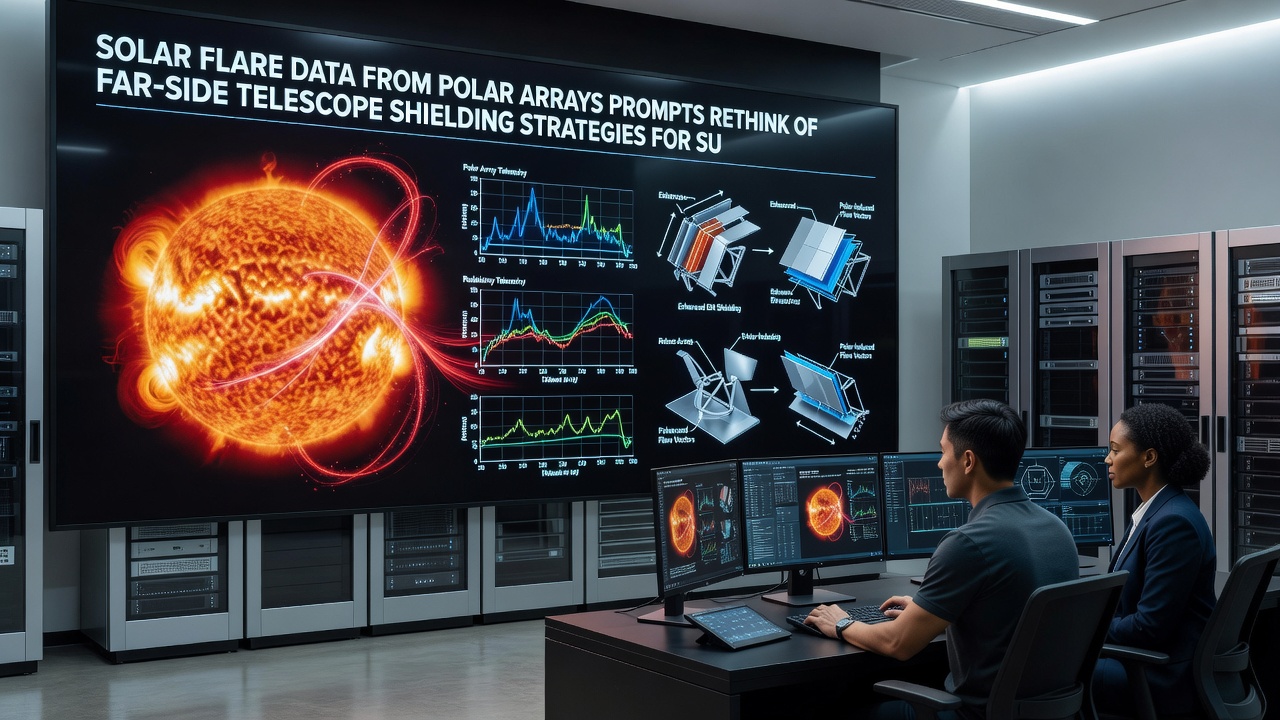
One study from the European Space Agency examined flare-induced noise levels and found correlations between polar array readings and projected impacts on lunar instruments, while another analysis from Australian research groups emphasized timing patterns that could affect scheduling of sensitive measurements. These combined datasets have prompted engineers to explore multilayer shielding configurations that combine conductive meshes with dielectric layers, and testing protocols now incorporate real-time flare alerts derived from polar stations.
Technical adjustments under consideration
Engineers are evaluating active shielding systems that can adjust conductivity in response to incoming flare data, and such designs draw directly from the high-resolution temporal records supplied by polar arrays. Passive approaches remain under review as well, with emphasis on lightweight composites that maintain thermal stability across the lunar night-day cycle. Data from October 2026 events revealed flare durations extending beyond previous estimates, which has led planners to incorporate longer protection windows into observation sequences. International collaboration through bodies like the Committee on Space Research has facilitated sharing of these findings, and coordinated workshops have identified common standards for flare response thresholds.
Additional work focuses on integrating predictive algorithms that use polar array inputs to forecast flare arrival times at the Moon, and early simulations indicate potential reductions in downtime when shielding activates preemptively. Those who've studied the interaction between solar radio bursts and lunar regolith note that secondary emissions could further complicate receiver calibration, prompting refinements in both hardware and data processing pipelines.
Future directions for sustained observations
Plans for next-generation far-side arrays now include modular shielding components that allow incremental upgrades as more polar data becomes available, and this flexibility supports long-term deployment goals. Partnerships between government agencies in the United States, the European Union, and research centers in Asia continue to refine requirements based on ongoing flare monitoring. Evidence suggests that combining real-time alerts with adaptive materials will form the foundation for reliable operations, while continued collection from polar sites ensures models stay current with solar cycle variations.
Conclusion
The integration of polar array solar flare data into far-side telescope planning marks a shift toward more responsive shielding architectures that prioritize continuous scientific return. As measurements accumulate from multiple global stations, design teams gain clearer parameters for protecting instruments against the full range of solar activity. This evolving approach supports extended radio astronomy programs on the lunar far side by addressing both immediate flare threats adn longer-term operational resilience.